
Feb 2, 2026 – Lisa Everett, www.patriotnheels.com
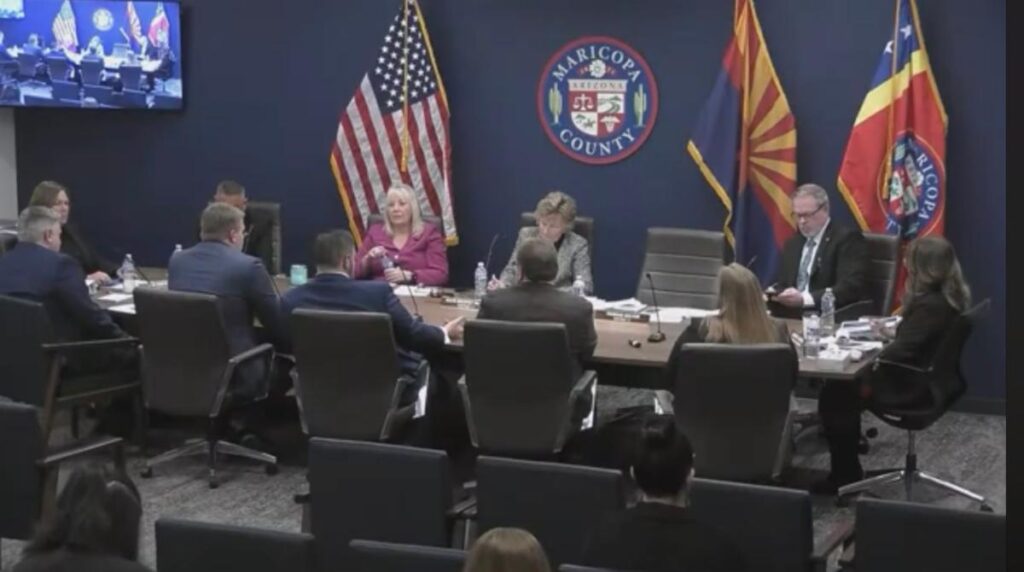
On Wednesday, January 28, the Maricopa County Board of Supervisors held a Special Meeting to hear 2027 Above Baseline budget requests from several county departments. Departments presenting included County Treasurer John Allen, County Attorney Rachel Mitchell, County Manager Jen Pokorski, and County Recorder Justin Heap.
Board Chairwoman Kate Brophy McGee opened the meeting by noting, “Everyone has important asks.” The Board had provided clear guidance to all presenters: develop a sustainable budget that advances the County’s mission and strategic goals, direct Human Resources to develop targeted compensation strategies, ensure presentations are made publicly, and evaluate any increases for their impact on the County’s expenditure limitations.
Most departments delivered presentations that were brief, focused, and detailed. That was not the case with the Recorder’s Office.
A Contentious Presentation
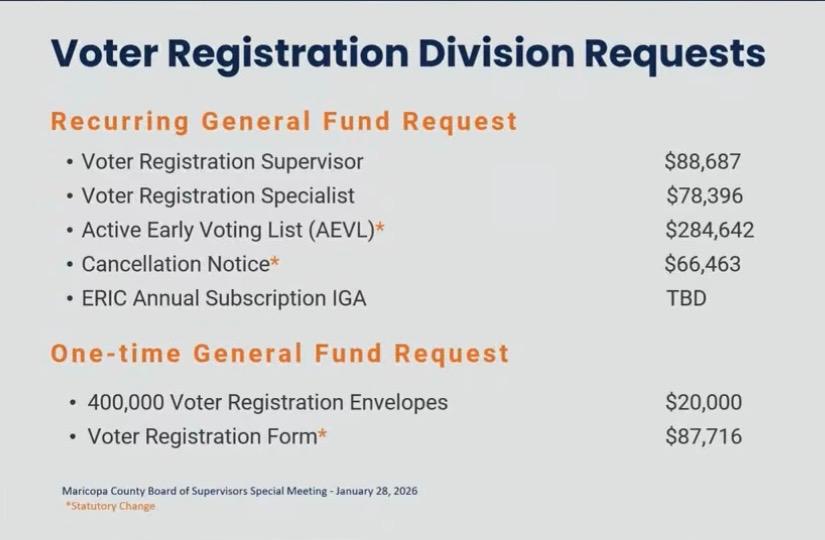
The presentation by Recorder Justin Heap quickly became lengthy and contentious, with visible friction between the Board and the Recorder’s Office. Heap requested the creation of at least 11 new positions, a notable expansion for a department. Note that the Recorder’s office generates revenue for both its office and the County’s General Fund. Heap stated that recordations are up 20%, increasing revenues in his department.
The requested positions included:
- 4 IT positions to upgrade and maintain a system that is more than 20 years old
- 2 recordation staff
- 1 grant manager
- 2 voter registration staff
- 2 signature verification staff
- 1 constituent services position
Heap attended the meeting with several staff members, including Sam Stone, Jeff Mason, and Richard Green. All Supervisors were present, with Thomas Galvin participating by phone.
Lawsuit Looms Over Budget Discussion
Throughout the presentation, discussion repeatedly veered off track due to ongoing tension surrounding the lawsuit between Heap and the Board of Supervisors over the shared services agreement. The legal dispute was referenced multiple times, and at several points the exchange resembled a territorial battle, with each side asserting its authority.
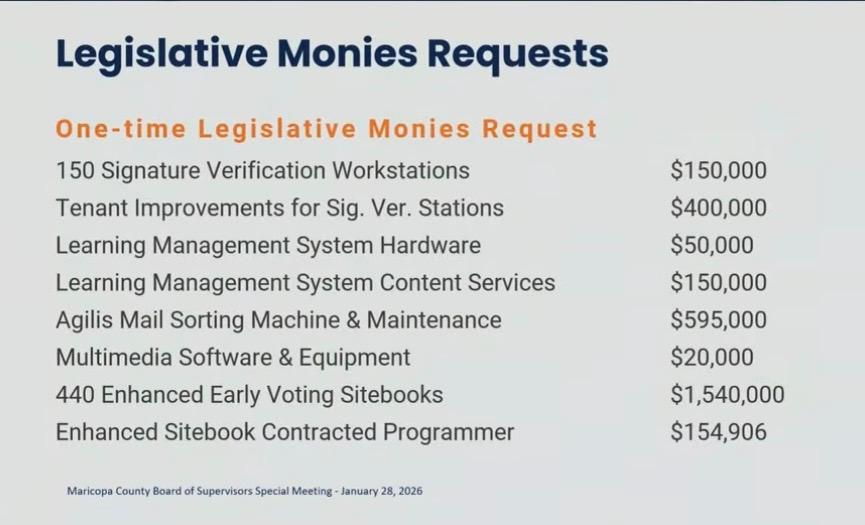
One particularly sensitive issue involved a repeat request for a $595,000 Agilis Mail Sorting Machine from Runbeck Election Services, including a five-year service agreement. Heap described the machine as a significant time-saving tool for his office.
This request was a hot-button issue for the Board because, during a court hearing two days earlier, Heap’s attorney suggested that voters had been disenfranchised due to the Board’s denial of the machine last year. Chairwoman Brophy McGee directly asked Heap whether voters had, in fact, been disenfranchised.
Heap responded plainly: “No.”
He clarified that while voters were not disenfranchised, they could have been, and emphasized that his office had not disenfranchised voters. However, he stated he could not speak for the prior administration under Stephen Richer. Heap reiterated that the machine would help staff meet required election timelines.
Legislative Funding for the Recorder’s Office
The Arizona Legislature partially funded the County Recorder’s Office with $4 million, helping offset a portion of the department’s budget needs. Chairwoman Kate Brophy McGee thanked Recorder Justin Heap for his efforts in securing that funding. Heap then provided the Board with a detailed breakdown of how the legislative funds would be allocated, noting that the money is specifically targeted toward election-related expenses, including operational and administrative costs tied to conducting elections.
Sharp Rebuke From Supervisor Gallardo
Near the end of the meeting, lone Democrat Steve Gallardo, delivered a pointed and emotional statement. Gallardo reminded Heap that he is one vote on the Board and questioned how Heap could expect his support while members of the Recorder’s leadership team were posting derogatory and partisan statements about Democrats on social media during business hours.
Gallardo stressed that the Recorder’s Office must be nonpartisan, adding that many Democrats lack confidence in the office due to perceived partisanship. His remarks reflected long-simmering frustration and were among the most direct criticisms of the meeting.
Chairwoman Brophy McGee expressed concerns as well, noting that Heap has traveled throughout Maricopa County spreading misinformation about the Board of Supervisors, and agreed that the Recorder’s Office should remain nonpartisan.
A Weak Showing, According to the Board
Supervisor Galvin concluded by calling the presentation weak and stated he would be submitting a list of questions in writing.
The meeting made one thing clear: the divide between the Maricopa County Board of Supervisors and the Recorder’s Office remains deep, and budget discussions—especially those tied to elections—are unlikely to cool anytime soon.
In Closing
As the meeting concluded, the contrast in leadership styles was evident. I appreciated the professionalism of Debbie Lesko and Mark Stewart, who consistently worked to keep the discussion grounded and focused on the task at hand—evaluating budget requests responsibly and within the Board’s established guidelines. In a meeting marked by tension and distraction, their steady approach underscored the importance of fiscal discipline, clear process, and respectful governance, especially when public trust and election integrity are central to the conversation.